One of the most remote and untouched mountain ranges in Colorado carries the name of a man who never set foot in it. The Ute have already chosen a better one.
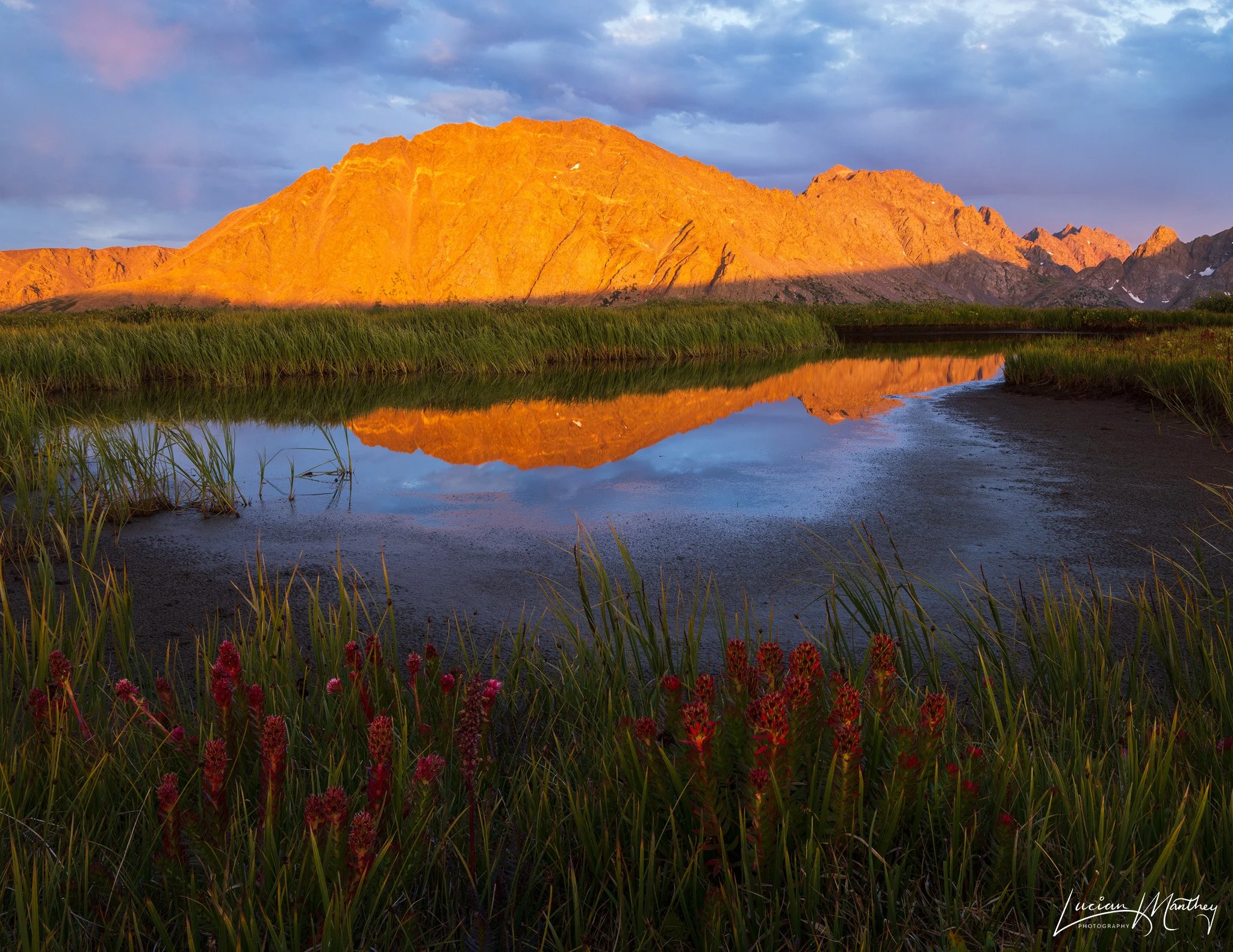
The rugged mountain range north of Vail runs about seventy-five miles through Eagle, Summit, Grand, and Routt counties.1 Mount Powell, at 13,566 feet, is the highest point in the range.2 Early miners did not find much worth digging for here, so the slopes were never touched by mine tailings or jeep roads.
Today, we call one of the most remote and untouched mountain ranges in all of Colorado the Gore Range, but who is Gore and why is he a bad representation for this sublime place?
Where the Name Came From
Sir St. George Gore was an Irish baronet who came west in the 1850s. His hunting trip lasted nearly three years, from 1854 to 1857, and took him through Colorado, Wyoming, Montana, and the Dakotas.3 He brought dozens of hired men to cook, hunt, and tend his hounds, along with wagons and crates of rifles.3
The exact number of animals he killed is unknown, but by his own count it included 2,000 bison, 1,600 deer and elk, and 105 bears.3 Even at the time, officials complained that he was killing the game that tribes depended on to survive.3
Gore likely never set foot in the range that carries his name, though he may have crossed Gore Pass to the north.1 In 1868 a Denver newspaper, the Rocky Mountain News, mentioned "Gore's Range" in passing in an article about a climb of Longs Peak, and the phrase later ended up on maps and guidebooks.1,4 Some people were still calling these mountains the Eagles Nest Range into the 1930s.1

The People Who Were Here First
Long before any of that, the Ute people thrived on these lands for thousands of years. In 1881 the federal government forcibly removed the White River Utes from Colorado to the Uintah Reservation in Utah.5 Today the Ute live on three reservations in Utah and southwestern Colorado.1

The Effort to Change the Name
Leon Littlebird, a Silverthorne musician of Navajo and Ute descent, spent years making the case that the name should go.4 In 2017 Summit County Commissioner Karn Stiegelmeier wrote the first resolution.6
The replacement name came from the tribes. After a long stretch of discussion, leaders of the Northern Ute, Southern Ute, and Ute Mountain Ute chose Nuchu Range.6 Nuchu is a spelling of what the Ute call themselves, and the name means roughly the Ute's Range.6
Summit County passed a second resolution in 2020 carrying that name.6 The tribes' petition has been before the Colorado Geographic Naming Advisory Board since September 2020, and it still has not been decided.7 It has not gone smoothly. Grand County formally declined to support it, and Vail's town council discussed it and could not agree.8
It Has Happened Before, and We Can Do It Again
In 2023 Mount Evans, west of Denver, was renamed Mount Blue Sky. It took six proposed names, years of review, and two nation-to-nation consultations.9,11 The old name honored territorial governor John Evans, whose policies resulted in the Sand Creek Massacre.10 The new name honors the Arapaho, known as the Blue Sky People, and the Cheyenne renewal ceremony called Blue Sky.10
I'm hopeful that someday we will be able to rename these extraordinary mountains to honor something more meaningful than a man who came through and left nothing more than destruction. The Ute were here for generations, and a name they've already chosen is ready and waiting.
About These Photographs
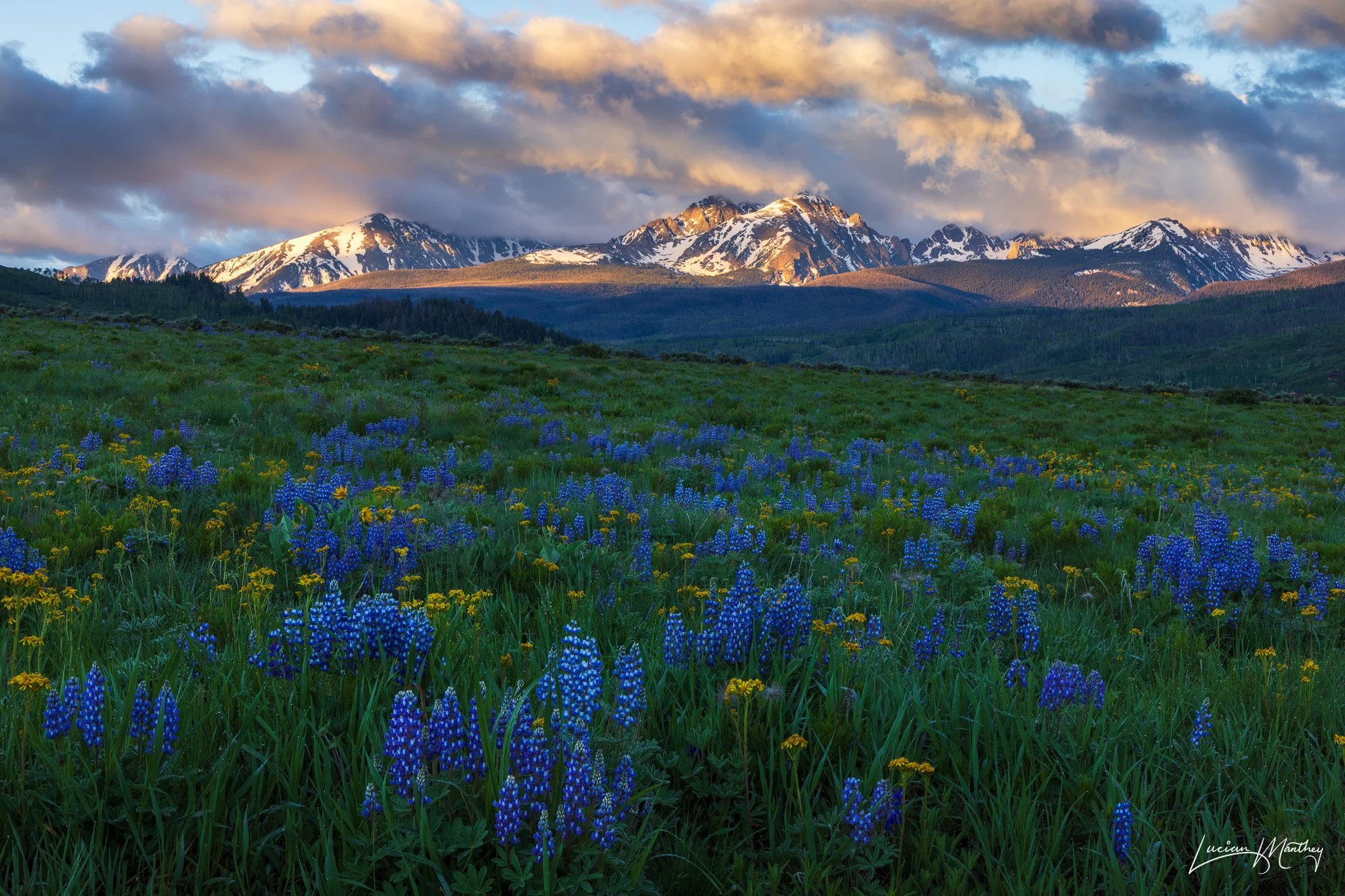
These photographs come from my project documenting each of the four seasons from different locations in and around the Nuchu (Gore) Range. These mountains are particularly special to me because they were some of the first subjects for my landscape photography.
Growing up, I frequently spent time at my grandparents' house in Silverthorne admiring the jagged peaks and rock spires towering over the valley. Some of my first photographs featured sunrises, sunsets, fall colors, and the Milky Way over the range. I can't wait to backpack deep into the most remote pockets of those mountains to take new photographs of places few have been. It is truly one of Colorado's most untouched and remote wilderness areas.
You'll notice that my image titles still use the name Gore Range. I use it because it is still the official name on maps today, so it's the most geographically accurate way to describe where these photographs were taken.

See the Nuchu Range collection
Gallery Metal, TruLife Acrylic & Giclée, with free shipping on every order.
I hope my photos make you think about the importance of the names of our beloved Colorado mountains.
References
- Amy Golden, "Changing Gore Range, named for man who slaughtered Colorado wildlife, hits stiff opposition in Grand County," Vail Daily / Sky-Hi News.
- "Name of Colorado mountain range could soon change," Denver Gazette.
- "Gore, Sir St. George (1811–1878)," Encyclopedia.com.
- "The Gore Range Renaming," Alta Journal.
- "Ute Indians," Utah Division of State History, History to Go.
- "Summit County proposes changing Gore Range to Nuchu Range," The Colorado Sun, September 18, 2020.
- "The Wilderness Society celebrates renamed Colorado mountain, Mount Blue Sky," The Wilderness Society.
- "Vail council split on renaming Gore Range," Vail Daily / Summit Daily.
- "Board on Geographic Names Completes Renaming of Mount Evans," U.S. Department of the Interior, September 15, 2023.
- "14,000-foot Colorado mountain tied to 1864 massacre renamed Mount Blue Sky," CBS News / Associated Press.
- "Mount Evans renamed Mount Blue Sky: Federal geographic naming board makes it official," Colorado Politics, September 15, 2023.